
Environmental Toxins Therapy at the Apheresis Center
Reduce Your Toxic Burden, Restore Your Health
We live in a world saturated with chemical exposure. It’s in the food we eat and the water we drink as well as the air we breathe and the products we use every day. Environmental toxins are now a part of modern life. And for many people, the cumulative effect of that exposure is a quiet, often invisible driver of chronic illness.
Because toxic burden builds up gradually and its symptoms are so often nonspecific (fatigue, brain fog, aches, digestive issues), it’s frequently overlooked as a root cause. This is why our approach starts by identifying your actual toxic burden, not by guessing at it.
As with all our programs, outcomes vary from person to person depending on the type, duration, and level of exposure, as well as your individual detoxification capacity. But choosing the Apheresis Center means working with a team experienced in identifying and reducing environmental toxin burden using advanced blood purification technology, alongside supportive nutritional and lifestyle strategies.
We offer environmental toxins therapy that places a strong emphasis on:
- Reducing the body’s overall toxic load;
- Supporting the body’s natural detoxification pathways;
- Addressing the downstream inflammation and immune dysregulation that toxic burden can drive.
What Are Environmental Toxins?

Environmental toxins are harmful substances that we’re exposed to through our surroundings, the air, water, soil, food, and everyday consumer products. Unlike acute poisoning, most environmental toxin exposure is low-level but constant, and it’s this steady, cumulative exposure, known as bioaccumulation, that allows toxins to build up in the body’s tissues over months and years, often outpacing the body’s natural ability to clear them.
Common types and examples of environmental toxins
- Heavy metals: lead, mercury, cadmium, arsenic, aluminium (from water, seafood, dental amalgam, industrial exposure);
- Endocrine disruptors: bisphenols (BPA), phthalates, and other plastic-derived chemicals that interfere with hormone signalling;
- Persistent organic pollutants (POPs): PCBs, pesticides, and flame retardants that resist breakdown and accumulate in fat tissue;
- PFAS (“forever chemicals”): used in non-stick cookware, water-resistant fabrics, and packaging;
- Air pollutants: particulate matter, vehicle emissions, industrial fumes;
- Mycotoxins: mould-derived toxins from water-damaged buildings;
- Microplastics: now detectable in blood, tissue and organs across the population.
How environmental toxins affect your health
When exposure outweighs the body’s capacity to detoxify through the liver, kidneys, lymphatic system, and gut, toxins accumulate and can quietly disrupt multiple body systems at once.
Toxins can trigger oxidative stress and chronic inflammation, a process well recognised as an underlying driver of cardiovascular disease, diabetes, and autoimmune disorders. Environmental toxin exposure has also been linked to:
- Hormone disruption and fertility issues;
- Immune dysregulation and autoimmune conditions;
- Neurological effects, including links to cognitive decline and Parkinson’s disease;
- Chronic fatigue and “brain fog”;
- Gut dysfunction, including IBS-type symptoms and increased intestinal permeability;
- Increased cancer risk with certain long-term exposures.
Because these effects build up slowly and present with such general symptoms, toxic burden is one of the most under-recognised contributors to unexplained chronic illness.
How Environmental Toxin Exposure Connects to Chronic Illness
Toxic burden rarely acts alone. In practice, it’s one of several overlapping drivers we see behind conditions like chronic fatigue syndrome, fibromyalgia, chronic Lyme disease, autoimmune disorders, and long-term inflammatory illness.
- A shared inflammatory pathway. Environmental exposures are increasingly recognised as upstream triggers that potentiate inflammatory networks, alter the gut microbiome, and tilt genetically susceptible people toward autoimmunity.
- A multifactorial model of chronic disease. Clinical researchers have proposed that both infections and toxins raise the body’s inflammatory response, and that this shared inflammatory burden links rising rates of conditions such as fibromyalgia and ME/CFS to tick-borne illness and environmental toxin exposure.
- Immune system disruption. Toxic exposures can alter T-cell function, cytokine production, and antigen recognition, which changes how the immune system operates and contributes to the kind of immune hyperreactivity or dysfunction seen in chemical sensitivity, mast cell activation, and autoimmune disease.
- Gut–toxin connections. Toxins in food and water can damage the gut lining and disrupt the microbiome, a pathway increasingly linked to IBS and other chronic digestive and inflammatory conditions.
In our experience, patients dealing with long-standing fatigue, pain, or inflammatory symptoms often have a measurable toxic burden sitting alongside and reinforcing their primary diagnosis. That’s why toxin assessment forms part of our broader diagnostic work-up across many of our chronic illness programmes, not just as a stand-alone concern.
Our Approach to Environmental Toxins Therapy
Every treatment plan begins with a detailed evaluation to understand where your toxic burden is coming from and how it may be affecting your health. Our initial assessment typically includes:
- A detailed exposure history: occupational, dietary, home environment, and dental history
- Review of existing symptoms and their timeline
- Assessment of detoxification capacity (liver, kidney, gut function)
- Review of any prior toxin testing or lab work
Additional Diagnostic Testing
Because toxic burden is cumulative and often invisible on standard blood panels, we use targeted testing to build an accurate picture, including where clinically indicated:
- Heavy metal testing (blood and/or urine)
- Environmental chemical and toxin panels
- Inflammatory marker assessment
- Gut health and microbiome analysis
- Hormonal and endocrine panels
- Nutritional deficiency screening
- Mycotoxin testing, where mould exposure is suspected
Our Treatment Approach: The Combination Therapy Model
We follow a Combination Therapy Approach, built around your specific exposure history and toxic load.
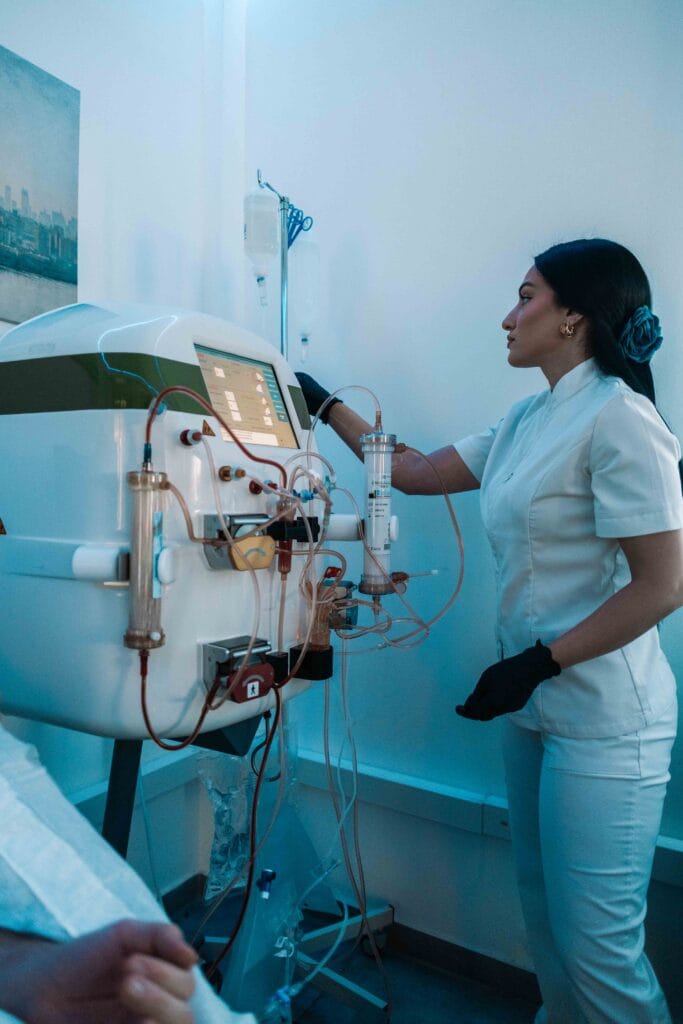
Our core therapy for reducing toxic burden is blood purification via INUSpheresis®: an advanced double-filtration apheresis technology that filters the blood outside the body to remove a broad range of harmful substances, including heavy metals, persistent organic pollutants and inflammatory mediators.
A 2025 case series published in the Journal of Clinical Apheresis assessed the clearance of heavy metals, volatile organic compounds and other pollutants using this double-filtration approach, and found it effective at reducing measurable levels of several environmental toxins from the bloodstream, with treatments typically spaced 48–72 hours apart to allow toxins stored in tissue to mobilise back into the plasma for further removal.
Treatment plans may include a combination of:
| Therapy | Blood Purification | Nutraceutical Protocols (Molecusan) | Clinical Nutrition and Health Coaching | Additional (case-dependent) |
| Main area of focus | INUSpheresis®: selective, multi-stage filtration to remove heavy metals, organic pollutants, and inflammatory complexes from the blood | Antioxidant and liver-support strategies; gut microbiome support | Personalised dietary strategy to reduce ongoing exposure and support detox pathways | IV micronutrient therapy; Gut repair protocols; MCAS-focused support where indicated |
Your Journey Starts Here
Your patient journey with us includes:
- An initial in-depth consultation and exposure history review
- Targeted toxin and functional testing
- Interpretation of your results and a personalised treatment strategy
- A structured therapeutic program, with treatments spaced to allow effective toxin mobilisation and clearance
- Follow-up testing to track your progress and adjust your plan
Step 1: A free 25–30-minute consultation to review suitability
Step 2: A paid doctor’s consultation, including a detailed history review
Step 3: Your first face-to-face consultation on arrival in Cyprus: assessment and protocol confirmation
Step 4: The treatment phase, with INUSpheresis® sessions typically spaced 48–72 hours apart
Step 5: Monitoring, re-testing, and adjustment based on your response
Frequently Asked Questions
Practical steps include filtering drinking water, choosing fresh over processed foods, minimising plastic food storage and packaging, ventilating your home well, choosing low-tox personal care and cleaning products, and addressing any mould issues promptly. Reducing new exposure is an important first step, but it doesn’t clear toxins already stored in the body, which is where targeted detoxification support comes in.
Testing typically involves blood or urine analysis for heavy metals, along with panels that screen for a broader range of chemical toxins, pesticides, and pollutants. Because many toxins are stored in fat and tissue rather than circulating freely in blood, a single test doesn’t always capture your full toxic burden, which is why a detailed exposure history matters just as much as lab results.
There’s growing evidence that environmental exposures can act as triggers that potentiate inflammatory pathways, alter the gut microbiome, and increase the risk of autoimmunity in genetically susceptible people. This doesn’t mean toxins are the sole cause of autoimmune disease, but they’re increasingly recognised as a contributing factor.
Yes. A category of chemicals known as endocrine disruptors (found in many plastics and personal care products) can interfere with normal hormone signalling, and exposure has been associated with hormonal imbalance and fertility difficulties in both men and women.
INUSpheresis® uses a double-filtration process to purify the blood outside the body, selectively removing heavy metals, persistent organic pollutants, and inflammatory mediators. Because some toxins are stored in tissue and gradually redistributed back into the bloodstream, treatments are typically spaced 48–72 hours apart to allow for effective, repeated clearance.
Scientific Studies
- Castillo-Alemán, M., et al. (2025). Double Filtration Plasmapheresis for Environmental Toxin Removal: A Case Series of Patients With Hyperlipoproteinemia(a). Journal of Clinical Apheresis. doi.org/10.1002/jca.70060
- Inflammation, Autoimmunity and Environmental Exposures. (2026). Open Access Government. openaccessgovernment.org/inflammation-autoimmunity-and-environmental-exposures
- Horowitz, R. (2019). The Global Rise of Chronic Diseases: Why Broaden the Paradigm to Include Tick-borne Illness and Environmental Toxin Exposure? Archives of Medical Case Reports, 1(1), 7–13. scientificarchives.com
- Association between Environmental Chemicals Co-exposure and Peripheral Blood Immune-Inflammatory Indicators. PMC. ncbi.nlm.nih.gov/pmc/articles/PMC9725172
- Environmental Modulators of Vascular Physiology and Inflammation. PMC. ncbi.nlm.nih.gov/pmc/articles/PMC12857456